

Key Takeaways
Option A
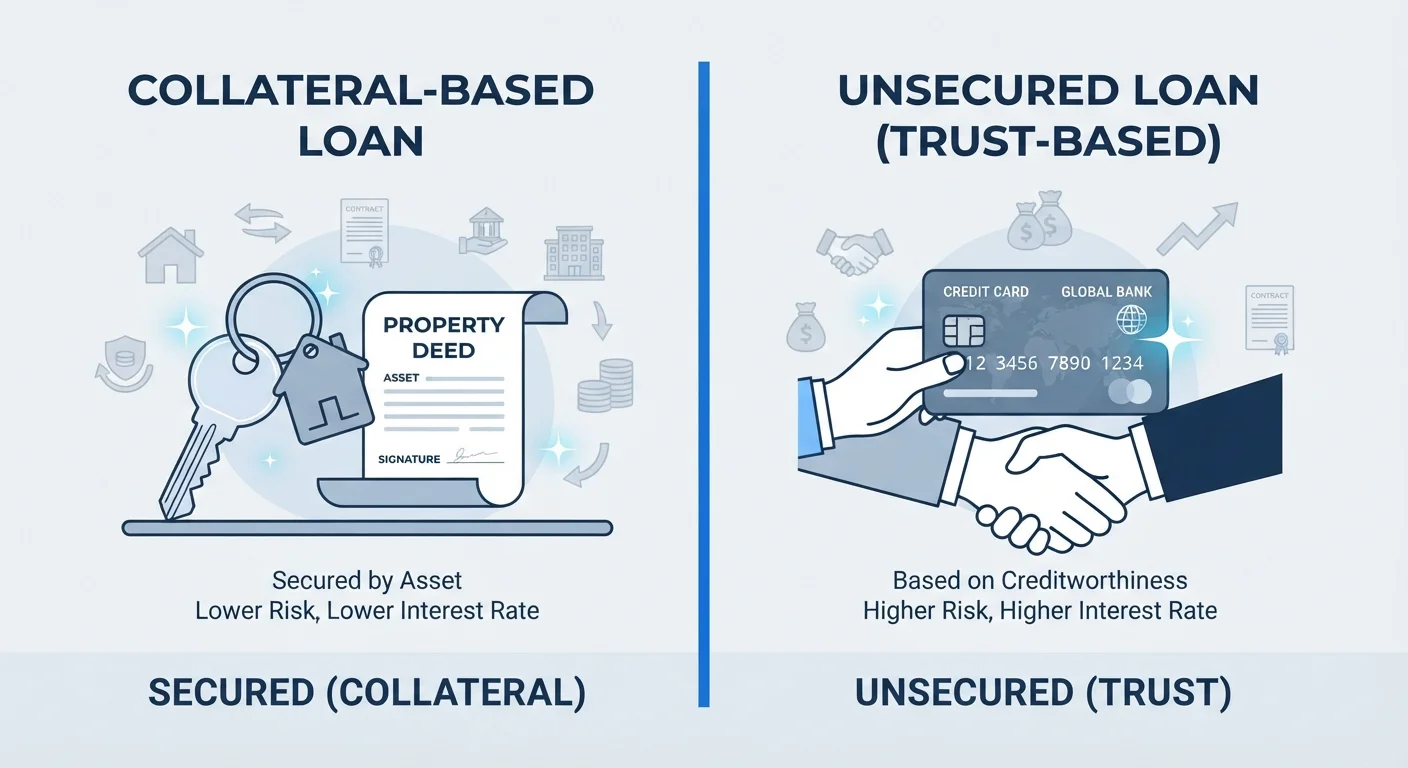
Secured Debt
Debt backed by a specific asset the lender can claim.
Best for: Borrowers who can offer collateral and want access to larger loan amounts or lower interest rates.
Option B
Unsecured Debt
Debt extended based on creditworthiness alone, with no collateral attached.
Best for: Borrowers who need flexible financing without pledging a specific asset as security.
If you want to borrow a large sum and can accept collateral risk
Secured Debt
Secured loans generally offer lower rates and higher borrowing limits, making them better suited for large, planned expenses like buying a home or vehicle.
If you want to avoid putting an asset at risk
Unsecured Debt
With no collateral attached, defaulting won't trigger asset seizure - though it still carries serious credit and legal consequences.
If you're exploring debt consolidation options
Secured Debt
A secured consolidation loan may offer a lower rate, but think carefully before pledging your home or other property to cover unsecured balances.
If you're negotiating or settling existing debt
Unsecured Debt
Unsecured creditors generally have more flexibility to negotiate settlements since they have no collateral to fall back on.
What Makes Debt 'Secured' or 'Unsecured'?
The difference between secured and unsecured debt comes down to one question: is there an asset backing the loan?
With secured debt, the lender has a legal claim - called a lien - on a specific piece of collateral. If you stop making payments, the lender has the right to seize and sell that asset to recover what it's owed. Common examples include mortgages (backed by your home) and auto loans (backed by the vehicle).
With unsecured debt, no collateral is pledged. The lender extends credit based on your credit score, income, and repayment history. Credit cards, personal loans, medical bills, and student loans are the most familiar examples. If you default, the lender can't directly take your property - but they can pursue legal remedies such as lawsuits, wage garnishment, or collections activity.
This structural difference ripples through everything: the interest rate you're offered, your negotiating leverage if you fall behind, and the consequences of default.
For a broader look at how debt fits into your overall financial picture, see The Complete Roadmap to Managing Debt.
Side-by-Side: How They Compare
The table below breaks down the key differences across the factors that matter most to borrowers.
| Criterion | Secured Debt | Unsecured Debt |
|---|---|---|
| Collateral required | Yes - a specific asset is pledged | No - based on creditworthiness |
| Typical interest rate | Generally lower | Generally higher |
| Common examples | Mortgage, auto loan, HELOC | Credit card, personal loan, medical debt |
| Default consequence | Repossession or foreclosure | Collections, lawsuit, wage garnishment |
| Borrowing limits | Often higher due to collateral | Typically lower without collateral |
| Negotiation flexibility | Less - lender can pursue asset | More - no collateral to recover |
| Credit score impact on default | Severe, plus asset loss | Severe, but no direct asset seizure |
Interest rates on secured debt are generally lower because the lender's risk is reduced by the collateral. That's why mortgage rates have historically been well below credit card rates. However, that lower rate comes with a trade-off: you're putting an asset on the line.
Unsecured debt offers flexibility - no asset pledge required - but lenders compensate for the higher risk with higher rates. Someone with a strong credit profile may qualify for competitive personal loan rates, but those still typically exceed secured loan rates for similar amounts.
~$12T
Total U.S. mortgage debt outstanding
According to Federal Reserve data, mortgage debt represents the largest single category of household secured debt in the United States.
~$1.1T
Total U.S. revolving consumer credit
Federal Reserve consumer credit data shows revolving credit - largely credit cards, a form of unsecured debt - exceeds one trillion dollars nationally.
3-10%
Typical unsecured personal loan rate spread above secured rates
Rate comparisons from consumer finance research consistently show unsecured personal loans carry notably higher APRs than secured loans of comparable size and term.
What Happens When You Default
Defaulting on either debt type is serious. But the immediate consequences differ in an important way.
Secured default can trigger repossession or foreclosure. A lender can move to reclaim the collateral - your car, your home - relatively quickly through legal processes. Even after the asset is sold, you may owe a deficiency balance if the sale proceeds don't cover the full debt.
Unsecured default doesn't result in immediate asset loss, but it's not consequence-free. Lenders can report the delinquency to credit bureaus, send the account to collections, or sue you in civil court. A court judgment could eventually lead to wage garnishment or a lien being placed on property, depending on state law.
In both cases, your credit score takes a significant hit - and the damage can linger for years. If you're weighing options like settlements or structured repayment plans, see Debt Management Plans vs. Debt Settlement for a full comparison of how each approach works.
Bankruptcy Treats These Debts Differently
In bankruptcy proceedings, secured and unsecured debts are handled separately. Secured creditors generally have priority claim to their collateral. Unsecured debts like credit cards may be dischargeable in Chapter 7 bankruptcy, while secured debts require you to either surrender the collateral or continue payments if you want to keep the asset. Bankruptcy law is complex - consult a qualified bankruptcy attorney before making any decisions.
How Debt Type Shapes Your Strategy
Understanding whether your debt is secured or unsecured isn't just academic - it shapes which repayment and relief strategies make sense.
Prioritization: Many financial educators suggest prioritizing secured debt payments to protect essential assets like your home or car. Falling behind on unsecured debt is damaging, but losing your primary residence is typically the more severe immediate consequence.
Negotiation: Unsecured creditors often have more room to negotiate - they may accept a lump-sum settlement for less than the full balance because they have no collateral to recover. Secured lenders have less incentive to settle since they can pursue the asset instead.
Consolidation: Some consumers use a secured loan (like a home equity loan) to consolidate high-rate unsecured debt. This can lower the overall interest rate, but it converts unsecured debt into secured debt - putting your home at risk if you can't repay. Review the trade-offs carefully before going this route. Debt Consolidation: What It Actually Does to Your Finances walks through what to weigh before deciding.
Repayment order: Once you've handled minimum payments on secured debts, strategies like the avalanche or snowball method help you tackle unsecured balances efficiently. See The Debt Payoff Showdown: Avalanche vs. Snowball to compare both approaches.
If you're considering a personal loan to pay off unsecured debt, Before You Take Out a Personal Loan to Pay Off Debt outlines the questions worth asking first.
This article is for general informational purposes only and does not constitute personalized financial or legal advice. Consult a qualified financial adviser or attorney for guidance specific to your situation.