

Key Takeaways
Option A
Natural Fabrics
The breathable, planet-derived classic.
Best for: Everyday comfort, sensitive skin, and warm-weather wear where breathability matters most.
Option B
Synthetic Fabrics
The engineered, performance-driven alternative.
Best for: Active wear, budget-conscious wardrobes, and garments that need to hold their shape through heavy use.
If you run hot or have sensitive skin
Natural Fabrics
Cotton, linen, and bamboo allow air to circulate and are less likely to cause irritation, making them a more comfortable everyday choice for warm conditions.
If you want low-maintenance, wrinkle-resistant clothing
Synthetic Fabrics
Polyester and nylon hold their shape, dry quickly, and rarely need ironing — a practical win for busy schedules or frequent travel.
If you're building a budget-friendly wardrobe
Synthetic Fabrics
Synthetics are typically less expensive to produce, keeping retail prices lower — though long-term durability and care costs are also worth factoring in.
If sustainability is a priority for you
Natural Fabrics
Natural fibers are generally biodegradable and renewable, though responsible sourcing still matters — organic certifications can offer additional assurance.
If you need activewear or moisture-managing gear
Synthetic Fabrics
Synthetics like nylon and polyester are engineered to wick sweat away from the body and dry quickly, outperforming most natural options in athletic contexts.
What Makes a Fabric Natural or Synthetic?
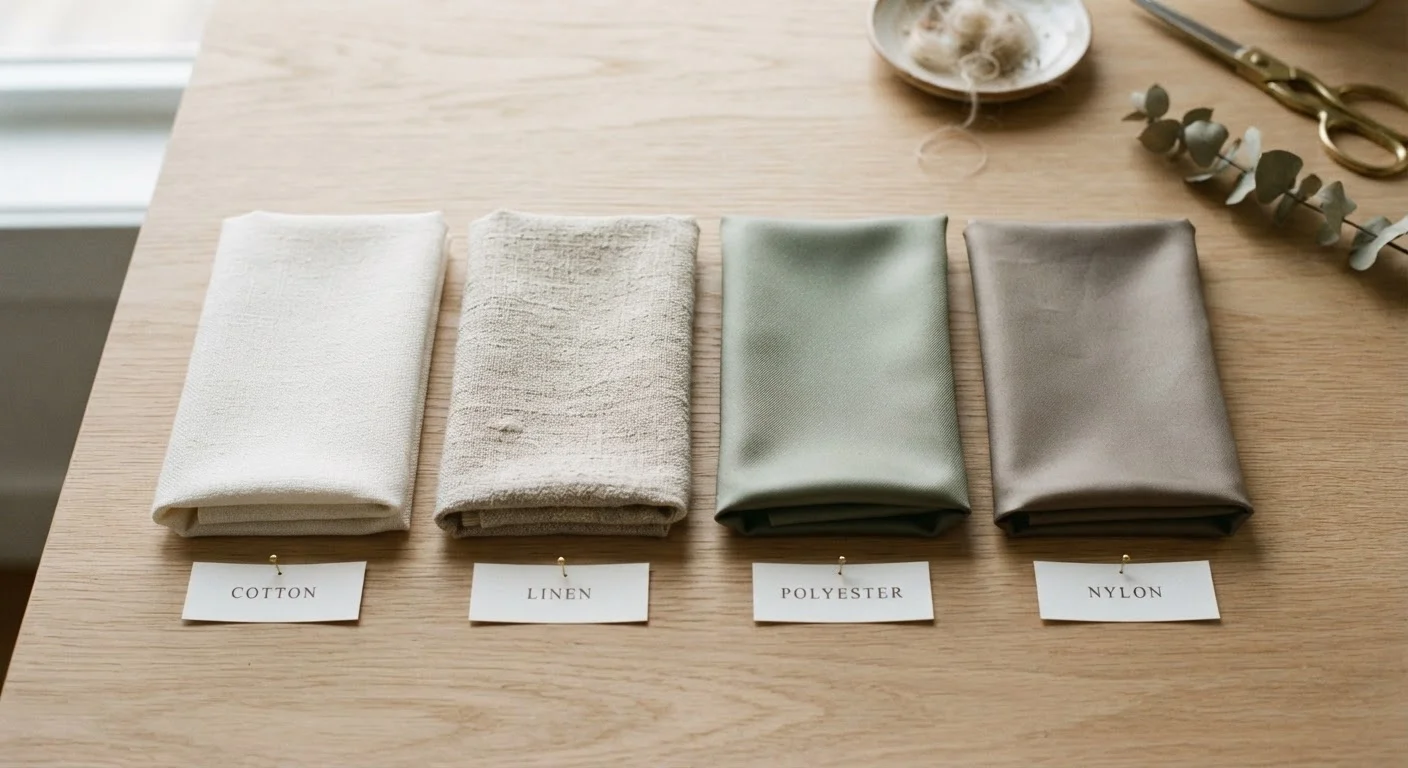
The terms natural and synthetic refer to where a fabric's fibers come from. Natural fabrics are derived from plant or animal sources: cotton comes from the cotton plant's seed pod, linen from the flax plant's stem, silk from silkworm cocoons, and wool from sheep fleece. Synthetic fabrics, by contrast, are made by chemically processing raw materials — most commonly petroleum — into fiber strands. Polyester, nylon, acrylic, and spandex all fall into this category.
A third group, semi-synthetic or regenerated fabrics like rayon and viscose, occupies a middle ground: they start with natural cellulose (often wood pulp) but go through heavy chemical processing. They share some qualities with both categories but require their own care considerations.
Understanding this origin story is the foundation for everything else — breathability, durability, environmental impact, and washing instructions all trace back to how a fiber was made. Just as the difference between ingredients matters in food, the source of an ingredient changes its properties in meaningful ways.
Comfort and Performance: How Each Fabric Feels Day to Day
Natural fabrics have a well-earned reputation for comfort. Cotton is soft, absorbs moisture well, and allows air circulation — qualities that make it a go-to for T-shirts, underwear, and warm-weather clothing. Linen is even more breathable but has a characteristic texture that softens with repeated washing. Wool regulates body temperature in both cold and mild conditions, making it surprisingly versatile.
Synthetic fabrics trade some of that natural softness for function. Polyester is lightweight and moisture-wicking, meaning it pulls sweat away from the skin rather than absorbing it — useful in athletic contexts but sometimes uncomfortable for extended everyday wear. Nylon is exceptionally strong and abrasion-resistant. Spandex adds stretch and recovery, which is why it's blended into everything from jeans to swimwear.
| Criterion | Natural Fabrics | Synthetic Fabrics |
|---|---|---|
| Origin | Plants or animals | Petroleum-based chemicals |
| Breathability | Generally high | Generally lower |
| Moisture management | Absorbs moisture | Wicks moisture away |
| Wrinkle resistance | Low to moderate | High |
| Durability | Moderate (varies by fiber) | High |
| Typical cost | Moderate to higher | Generally lower |
| Biodegradability | Yes | No |
| Care requirements | Often gentle wash or dry clean | Usually machine washable |
Blended fabrics — say, a cotton-polyester mix — are designed to capture the best of both worlds: the softness and breathability of cotton combined with the wrinkle resistance and durability of polyester. Most everyday clothing is some kind of blend, and the ratio on the care label tells you a lot about how the garment will perform and age.
Cost, Care, and Longevity
Budget is one of the most practical lenses for comparing fabric types. Generally speaking, synthetic fabrics cost less to manufacture, which often — though not always — means lower retail prices. However, price at purchase is only part of the picture. A higher price tag doesn't always signal better quality, and the same logic applies to fabric: a well-constructed cotton garment may outlast a poorly sewn polyester one.
A Note on Fabric Labels
U.S. law requires garment manufacturers to include fiber content on care labels — look for the percentage breakdown (e.g., "60% cotton, 40% polyester"). The dominant fiber listed first gives you the clearest clue about how the garment will feel and perform. When in doubt, follow the most delicate fiber's care instructions to avoid damage.
Care requirements also affect long-term cost. Many natural fabrics — linen, wool, silk — require gentle washing or dry cleaning, adding time and expense. Most synthetics are machine-washable and quick-drying. That said, washing synthetics releases tiny plastic particles called microfibers into wastewater systems, an environmental concern that's increasingly documented in research.
For practical garment care guidance that applies regardless of fabric type, see our article on how to care for your clothes so they actually last. And if you're shopping on a budget, understanding the trade-offs between thrift shopping and fast fashion is another worthwhile read — fabric quality plays a central role in that comparison too.