

Key Takeaways
Why Hair Myths Are So Persistent
Hair advice gets passed down like heirlooms — grandmother to mother to child — and repeated so often it takes on the weight of fact. Add in heavily marketed products and social media tutorials, and it becomes genuinely difficult to separate useful guidance from fiction. The good news: a growing body of trichology (the study of hair and scalp health) gives us reliable answers to many long-standing questions.
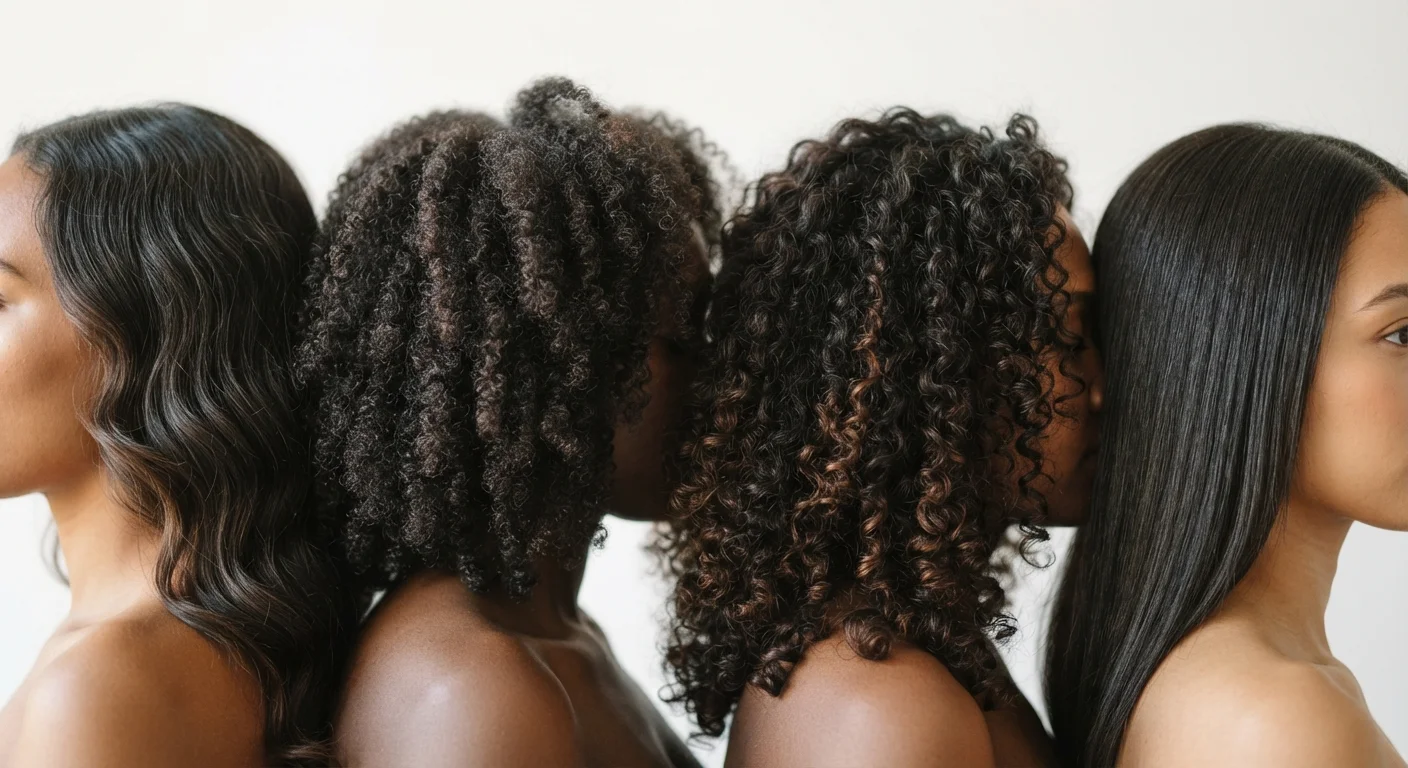
Whether you have tightly coiled 4C hair, fine straight strands, or anything in between, these myths affect everyone. Understanding your actual hair type and porosity is a far better starting point than following universal rules that were never universal to begin with.
Myth
Trimming your hair makes it grow faster.
Fact
Hair growth happens at the follicle in the scalp, not at the ends. Trimming has no effect on growth rate.
Hair grows from follicles beneath the scalp at a genetically determined rate — roughly half an inch per month on average, though this varies by individual. Scissors never touch the follicle, so they cannot influence growth speed. What regular trims do accomplish is removing split ends before they travel up the shaft and cause breakage, which helps hair retain length over time. That retention can make it seem like trimming accelerates growth, but the biology doesn't support that claim.
Myth
Brushing your hair 100 strokes a day gives it shine and strength.
Fact
Excessive brushing creates friction that weakens the hair shaft and increases breakage, especially on dry or textured hair.
This myth likely originated when most people used natural bristle brushes and had less chemically processed hair. Even then, 100 strokes was more ritual than science. Today, dermatologists and hair researchers generally advise brushing only as needed to detangle, using wide-tooth combs on wet hair, and starting from the ends rather than the roots to minimize mechanical damage. For curly and coily hair types, aggressive brushing can disrupt curl pattern and cause significant frizz and breakage.
Myth
Your hair 'gets used to' a shampoo and stops responding to it.
Fact
Hair follicles and strands don't develop biological resistance to shampoo ingredients the way bacteria do to antibiotics.
What people often notice is product buildup — residue from conditioners, styling products, or hard water minerals that accumulates over time and makes hair feel heavier or duller. Switching shampoos may temporarily clear that buildup, creating the impression of a reset. The fix, if buildup is the issue, is a clarifying wash rather than constant rotation. How often you should wash at all depends heavily on your scalp type and lifestyle — there's no one-size answer, as explored in this guide on shampoo frequency.
Myth
Rinsing with cold water makes hair shinier.
Fact
Cold water may cause the cuticle to lie slightly flatter momentarily, but the effect on long-term shine is minimal compared to moisture levels and overall hair condition.
The hair cuticle — the overlapping outer layer of each strand — does respond to temperature and pH, but the idea that a cold rinse dramatically seals the cuticle and produces lasting shine is largely exaggerated. Shine is primarily a function of how smoothly the cuticle lies, which is influenced far more by hydration, conditioning, and avoiding damage than by water temperature at the end of a shower. If cold rinses feel pleasant, there's no harm in them — but they're not a substitute for consistent moisture care.
Myth
Stress turns hair gray overnight.
Fact
Graying is driven by melanin-producing cells called melanocytes slowing down or stopping — a gradual, largely genetic process.
The idea of hair going gray overnight from shock or stress is a literary device, not physiology. Existing gray hairs don't revert to pigmented strands, and already-growing hair can't change color mid-shaft. That said, research does suggest chronic stress may accelerate the graying process over time by affecting stem cells in the hair follicle — but this is a slow progression, not a sudden transformation. Genetics remain the dominant factor in when and how quickly graying occurs.
Myth
Protective styles are always protective.
Fact
Protective styles reduce exposure and manipulation, but incorrect installation or maintenance can cause significant damage, including traction alopecia.
Braids, twists, locs, and similar styles are genuinely useful for reducing daily manipulation and retaining length — when done correctly. The risk comes when styles are too tight, left in too long, or installed on hair that isn't adequately moisturized. Traction alopecia — hair loss caused by repeated tension on follicles — is a real and often preventable condition. Understanding what protective styles actually protect against helps set realistic expectations and safer habits.
What the Science Actually Supports
Correcting these myths isn't just satisfying — it can change your routine in meaningful ways. Breakage is one of the most common complaints across all hair types, and a surprising number of cases trace back to well-intentioned habits built on misinformation. Our guide on why hair keeps breaking off explores this in more depth.
Sudden or Significant Hair Loss Warrants Medical Attention
Noticeable shedding beyond the typical 50–100 hairs per day, patchy loss, or changes in hair texture alongside other symptoms can signal underlying health conditions including thyroid disorders, nutritional deficiencies, or hormonal changes. Don't rely on home remedies or product switches as a first response. A dermatologist or trichologist is the appropriate resource for diagnosing and addressing hair loss.
Scalp health is another area where myth frequently overrides evidence. The scalp is skin, and it responds to the same principles: balance, consistent care, and avoiding unnecessary irritation. For a solid foundation, see our scalp health primer.
~0.5"
Average monthly hair growth rate
Hair biology research consistently places average scalp hair growth at roughly half an inch per month, with variation by individual, age, and health status.
Up to 50%
Tensile strength lost when hair is wet
Studies in hair fiber science indicate wet hair can lose a significant portion of its tensile strength, making wet detangling with harsh tools particularly damaging.
Heat styling is similarly surrounded by exaggerated claims in both directions. It isn't automatically damaging, nor is it risk-free at any temperature. How temperature, frequency, and prep interact matters far more than blanket avoidance or casual overuse. And if you're weighing DIY versus professional treatments, the trade-offs are worth thinking through carefully.
This article is for general informational purposes only and does not constitute medical or professional advice. Consult a licensed dermatologist or trichologist if you have concerns about hair loss, scalp conditions, or significant changes in hair health.