

Key Takeaways
Smart Home Ecosystem
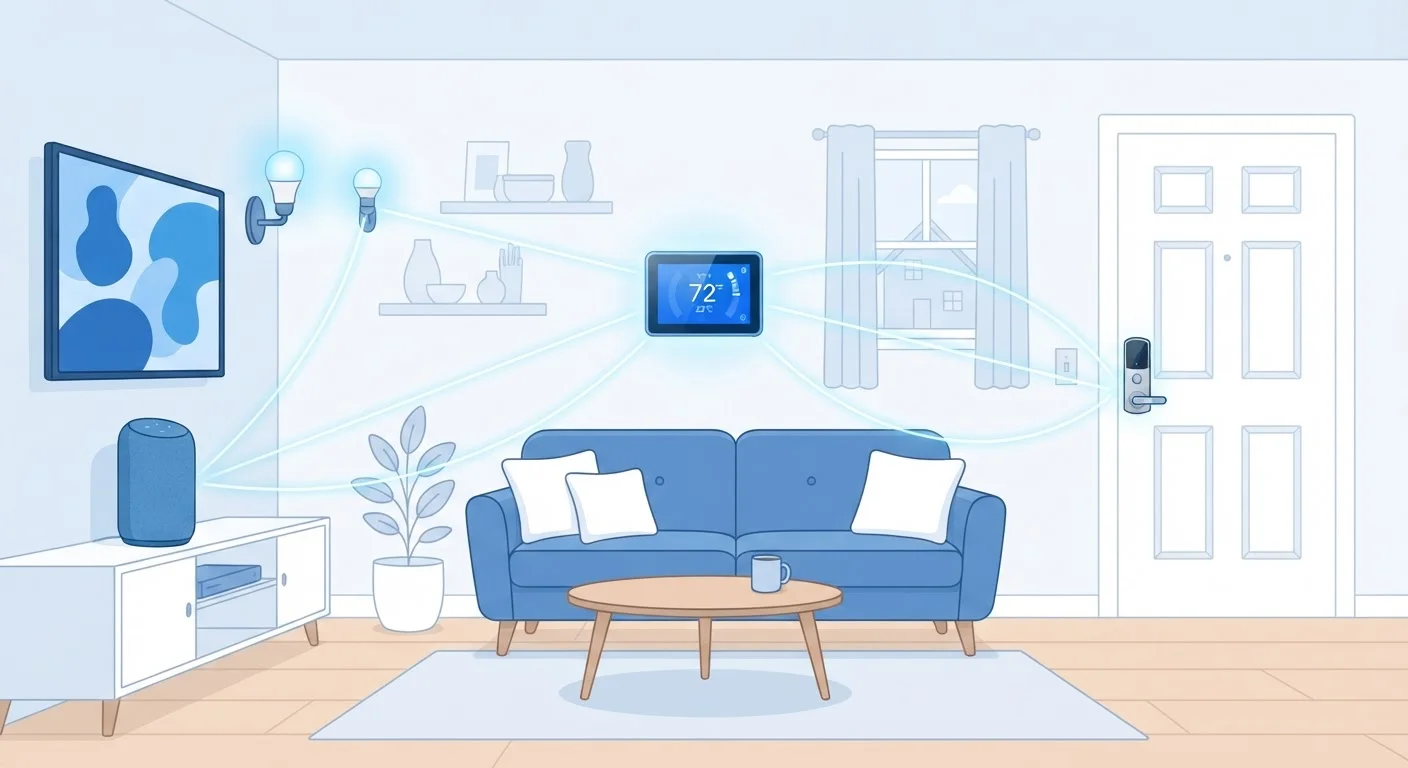
A smart home ecosystem is the combination of devices, apps, and communication protocols that allow your connected home gadgets to work together. Think of it as the shared language and infrastructure that lets your thermostat talk to your lights, or your door lock talk to your security camera. Without a compatible ecosystem, devices from different manufacturers may simply ignore each other.
Ecosystems operate through wireless protocols (like Zigbee, Z-Wave, or Wi-Fi) and, increasingly, a unifying standard called Matter, which is designed to allow cross-platform device control from a single app or hub.
Why Compatibility Is the Foundation of a Smart Home
Before buying a single smart bulb or thermostat, the most important question to ask is: what ecosystem does this device belong to? A smart home isn't just a collection of gadgets — it's a network, and networks only function when their members speak the same language.
Every smart home device communicates using a protocol — a set of rules that determines how data is sent and received. Some devices use your home's existing Wi-Fi network. Others use dedicated low-power radio protocols like Zigbee or Z-Wave, which form their own mesh networks independent of your router. A handful of older devices rely on Bluetooth or even proprietary radio frequencies that only work within a single brand's system.
The platform layer sits above the protocol. Platforms — such as those operated by major voice assistant ecosystems — are the apps and cloud services that let you control devices, set automations, and bring everything into one interface. A device can follow the right protocol but still be incompatible with your preferred platform if it hasn't been certified to work there.
For a deeper look at how all of these layers fit together, see the full picture of smart home automation.
600M+
Matter-compatible devices projected to ship
Industry analysts and the Connectivity Standards Alliance have projected substantial growth in Matter-certified device shipments as adoption accelerates across major platforms.
~30%
U.S. households with at least one smart home device
Research from multiple market intelligence firms suggests roughly one in three American homes has adopted at least one connected smart home device.
3–4
Average number of smart home protocols in a typical setup
Industry surveys indicate that many households end up with devices across multiple protocols, underscoring the importance of hub compatibility and cross-platform standards.
Protocols Explained: Zigbee, Z-Wave, Wi-Fi, and Matter
Wi-Fi is the most familiar protocol and requires no hub — devices connect directly to your router. The tradeoff is that Wi-Fi devices consume more power and can strain networks in larger homes with many connected gadgets.
Zigbee and Z-Wave are mesh protocols, meaning each device can relay signals to others, extending range without adding access points. They use very little power, which makes them popular for battery-operated sensors and locks. Both typically require a hub or compatible smart speaker to bridge them to your phone or voice assistant. If these terms are new to you, the plain-English glossary of smart home terms offers clear definitions.
Matter is the newest and most significant development in smart home interoperability. Launched through a collaboration of major technology companies, Matter operates over Wi-Fi and Thread (a low-power mesh protocol) and is designed so that a single certified device can be controlled through multiple platforms simultaneously. A Matter-compatible light bulb, for example, could be managed through different voice assistants and apps without being locked to one brand.
Check for Matter Certification Before You Buy
When evaluating new smart home devices, look for the Matter logo or certification on the packaging or product listing. Matter-certified devices offer greater flexibility because they can work across multiple platforms without being locked to a single brand's app. This is especially useful if you already own devices from different manufacturers or plan to expand your setup over time.
Understanding the trade-offs between wired and wireless smart home devices can also help you decide which protocol family fits your home's layout and needs.
Hubs, Bridges, and the Devices That Connect Them
A hub is a central device that speaks multiple protocols and translates between them. If you have a mix of Zigbee sensors, Z-Wave locks, and Wi-Fi cameras, a hub can serve as the interpreter that brings them all into one app. Many modern smart speakers and displays now include hub functionality, supporting Zigbee, Thread, and Matter alongside Wi-Fi — reducing the number of extra boxes you need on a shelf.
A bridge is a more limited version: it connects devices using one proprietary protocol to a broader platform, but usually doesn't support multiple protocols. Bridges are common in lighting systems where a single manufacturer's hub connects their bulbs to third-party platforms.
One important distinction is whether your hub processes commands locally — on the device itself — or relies on a cloud server. Local processing means your devices continue to respond even if your internet goes down. Cloud-dependent devices may stop responding entirely during outages, which is worth factoring into decisions about security-critical devices like locks and alarms.
Ecosystem Lock-In: A Risk Worth Understanding
When you invest in devices tied to a single ecosystem, you're trusting that the company behind it will continue to support those products. App shutdowns, protocol shifts, and corporate acquisitions have historically left consumers with devices that no longer function as intended. Understanding why smart home devices stop working together — and what precautions reduce that risk — is essential reading before expanding any setup.
Strategies that can reduce lock-in risk include prioritizing Matter-certified devices, choosing products that offer local processing, and avoiding ecosystems that rely entirely on a single vendor's cloud infrastructure. No approach eliminates the risk entirely, but informed choices at the point of purchase significantly reduce future disruption.
Security is a related concern: devices that fall out of active support may stop receiving firmware updates, leaving known vulnerabilities unpatched. See how to keep your home devices secure after setup for practical steps on maintaining a safer connected home.
“The fragmentation of the smart home market has been its biggest obstacle to mainstream adoption. Standards like Matter represent the industry's recognition that consumers won't tolerate a system where every device needs its own app and none of them talk to each other.”
— Stacey Higginbotham, Technology journalist and smart home analyst, host of the IoT Podcast