

| Style spectrum | Minimalist ← Transitional → Maximalist |
| Most widely used residential style | Transitional (blends traditional and contemporary) |
| Defining minimalist palette | White, cream, warm gray - few accent colors |
| Mid-century modern era | Approximately 1945-1969 |
| Industrial style signature materials | Exposed brick, concrete, steel, reclaimed wood |
| Boho cohesion anchor | Warm, earthy undertone across layered textiles and objects |
Understanding Interior Design Styles
Interior design styles are frameworks - shared vocabularies of color, material, furniture shape, and spatial philosophy. Knowing the defining traits of each style helps you make intentional choices rather than random purchases. Most homes blend two or more styles, and that's perfectly valid. The goal is coherence, not rigid category membership.
| Style spectrum | Minimalist ← Transitional → Maximalist |
| Most widely used residential style | Transitional (blends traditional and contemporary) |
| Defining minimalist palette | White, cream, warm gray - few accent colors |
| Mid-century modern era | Approximately 1945-1969 |
| Industrial style signature materials | Exposed brick, concrete, steel, reclaimed wood |
| Boho cohesion anchor | Warm, earthy undertone across layered textiles and objects |
Before diving into specific styles, it helps to understand the core design principles that underpin every well-put-together room - concepts like scale, balance, and emphasis apply across all aesthetic categories.
The Major Interior Design Styles at a Glance
Each style below has recognizable signatures. Use these descriptions as reference points when you're trying to name what you're drawn to - or understand why a room feels off.
Minimalist
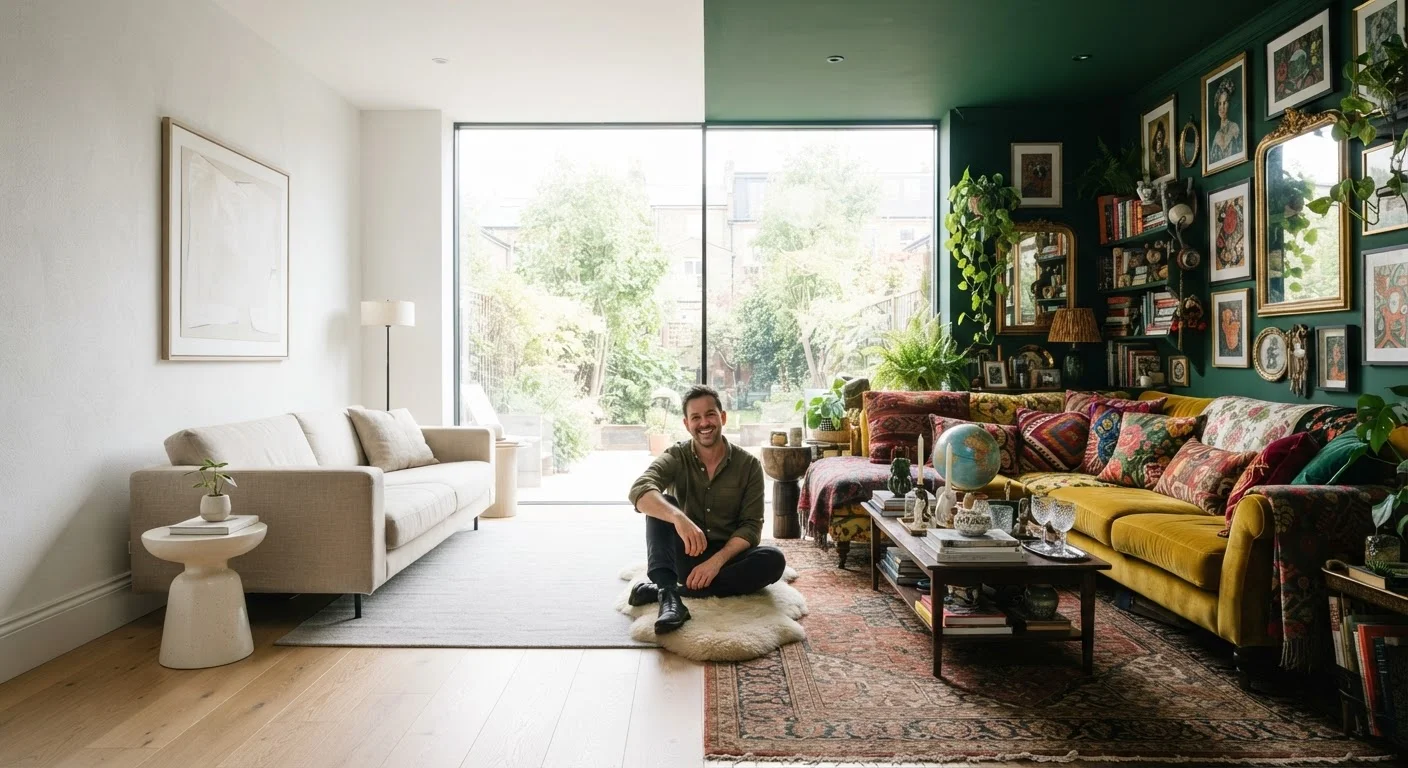
Defined by intentional reduction: neutral palettes (white, cream, warm gray), clean-lined furniture, and strict editing of objects. Storage is hidden. Every item earns its place. The mood is calm and uncluttered.
Scandinavian (Scandi)
A livable evolution of minimalism. Scandi spaces are still simple but warmer - natural wood tones, soft textiles like wool and linen, and an emphasis on hygge (coziness). Pale blues, greens, and warm whites are common. Functionality is non-negotiable.
Mid-Century Modern
Rooted in postwar American and European design (roughly 1945-1969). Hallmarks include tapered furniture legs, organic curves, and a mix of natural and manufactured materials - walnut wood alongside molded fiberglass or plastic. Color palettes lean toward mustard, olive, burnt orange, and teal against neutral backgrounds.
Industrial
Inspired by converted lofts and warehouses. Raw materials dominate: exposed brick, concrete floors, steel beams, and dark iron fixtures. Furniture is often utilitarian. The palette is dark and moody - charcoal, rust, and aged leather. Warmth typically comes from Edison bulbs and reclaimed wood accents.
Bohemian (Boho)
Eclectic, layered, and deeply personal. Boho spaces embrace rich jewel tones, global textiles, mixed patterns, plants, and collected objects that tell a story. There are no strict rules - but cohesion usually comes from a warm, earthy undertone running through the layering. For pattern-mixing guidance in this style, see how to mix patterns intentionally.
Traditional / Classic
Draws from 18th- and 19th-century European interiors. Features include symmetrical arrangements, ornate wood furniture with cabriole legs or carved details, rich fabrics (velvet, damask, silk), and a warm color palette of burgundy, navy, and forest green. Emphasis on permanence and formality.
Transitional
Deliberately bridges traditional and contemporary design. Furniture silhouettes are simplified but retain warmth; palettes are neutral and layered with texture rather than pattern. This is among the most widely used residential styles because it reads as polished without feeling rigid.
Maximalist
The philosophical opposite of minimalism: more is intentional. Bold colors, collected art, layered rugs, and abundant objects create spaces full of personality. The key difference between maximalism and clutter is curation - every item is chosen, even if the overall effect is abundant. A consistent color story or material thread holds it together.
Hygge
A Danish and Norwegian concept describing a feeling of coziness, warmth, and contentment. In interior design, it's achieved through soft lighting, natural textures, and comfortable, inviting spaces.
Transitional style
A design approach that combines elements of traditional and contemporary aesthetics - simplified furniture forms, neutral palettes, and layered textures - to create a polished, versatile interior.
Palette
The curated set of colors used throughout a room or home. A consistent palette creates visual cohesion even when individual pieces vary in style or material.
Curation
The deliberate selection and arrangement of objects in a space. Curation distinguishes a considered maximalist interior from an overcrowded one.
Organic form
Shapes in furniture or décor that echo natural, curved, or irregular forms rather than strict geometric lines. Common in mid-century modern and bohemian design.
Applying This Knowledge to Your Own Home
Identifying your style is useful only when it translates into decisions. A few practical strategies:
- Anchor with one style, layer with a second. A Scandi-minimalist base with boho textile accents is more livable than either style in its purest form.
- Use the style's palette as your guide. Color is the fastest way to signal a design direction. If you're unsure where to start, a beginner-friendly approach to color can help you build a cohesive palette from scratch.
- Scale matters as much as style. Even a perfectly styled room fails if furniture is proportioned incorrectly for the space. This is especially relevant in compact rooms - see strategies for small living rooms for practical layout guidance.
- Shop with a style brief. Write down three to five defining words from your chosen style before purchasing anything. Use them as a filter: does this piece fit?
Style Labels Are Starting Points, Not Rules
No room needs to fit a single category perfectly. Many designers treat style names as useful shorthand for conversations about mood, material, and color - not as checklists to complete. If a piece resonates with you and works within your palette, it can belong in your home regardless of which style catalog it comes from.
Design categories are descriptive tools, not prescriptions. The most successful home interiors reflect the people who live in them - so treat any style label as a starting point, not a rulebook.