

Key Takeaways
Option A
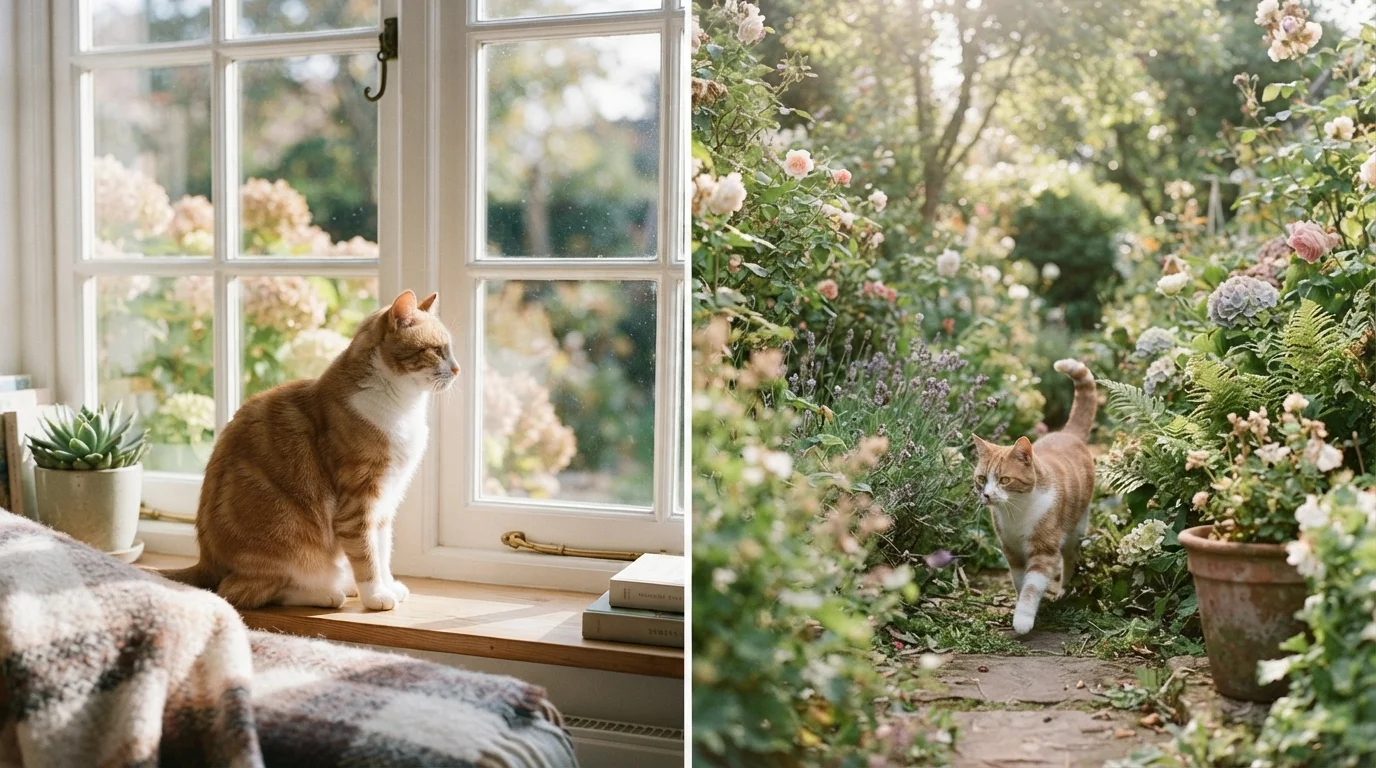
Indoor Cat
The sheltered, enrichment-dependent lifestyle.
Best for: Cats kept fully inside who rely on their environment and owner interaction for physical and mental stimulation.
Option B
Outdoor Cat
The free-ranging, exposure-prone lifestyle.
Best for: Cats with regular or full access to the outdoors, requiring heightened preventive veterinary care and parasite management.
If your cat lives entirely indoors
Indoor Cat care routine
Prioritize structured enrichment, calorie-controlled feeding, and regular vet visits focused on weight management and dental health.
If your cat roams outdoors regularly
Outdoor Cat care routine
Emphasize consistent parasite prevention, up-to-date vaccinations including rabies and FeLV, and regular physical exams to catch injuries or infections early.
If you have a senior cat regardless of lifestyle
Indoor Cat care routine
Most veterinarians recommend transitioning aging cats indoors to reduce injury and illness risks as immune function and mobility decline with age.
Why Lifestyle Changes Everything
A cat's living environment is one of the single biggest determinants of their health risks, behavioral needs, and daily care requirements. Indoor and outdoor cats are exposed to very different physical and biological stressors — and a care routine built for one won't adequately serve the other.
The American Veterinary Medical Association (AVMA) acknowledges that while indoor cats generally live longer on average, outdoor cats face a broader range of acute health threats. Neither lifestyle is automatically superior, but each demands a tailored approach from owners. Understanding exactly what changes — and why — helps you build a routine that genuinely fits your cat's life.
| Criterion | Indoor Cat | Outdoor Cat |
|---|---|---|
| Average lifespan | 12–18 years (generally longer) | 5–7 years on average |
| Parasite risk | Lower; still present via indirect exposure | High; fleas, ticks, worms, heartworm |
| Vaccine needs | Core vaccines (rabies, distemper) | Core plus FeLV; broader coverage recommended |
| Obesity risk | Higher due to lower activity | Lower; more natural calorie burn |
| Enrichment requirement | High; owner must provide actively | Moderate; environment provides naturally |
| Injury/trauma risk | Low | High (vehicles, predators, fights) |
| Infectious disease exposure | Low | Elevated; contact with wildlife and strays |
| Grooming attention | Nails, dental, coat condition | Coat debris, wound checks, tick removal |
Veterinary Care and Preventive Health
Outdoor cats require a broader preventive health profile. Because they encounter wildlife, other cats, insects, and soil, their exposure to infectious disease and parasites is significantly higher. Core vaccines — rabies and feline distemper — are essential for all cats, but outdoor cats typically also need protection against feline leukemia virus (FeLV), which spreads through contact with infected cats. Your veterinarian is the right person to guide vaccine schedules based on your cat's specific exposure level.
Parasite prevention is where the two lifestyles diverge most sharply. Outdoor cats need year-round protection against fleas, ticks, and intestinal worms, including heartworm — a parasite transmitted by mosquitoes that's often overlooked in cats. Indoor cats still benefit from parasite prevention (fleas can hitchhike indoors on clothing or other pets), but the urgency and frequency of treatment may differ. Discuss the right protocol with your vet.
For both lifestyles, consistent preventive veterinary care is the foundation. As cats age, the stakes on both sides increase — see our article on how veterinary care shifts for senior cats.
2–3x
Higher FeLV exposure risk outdoors
Cats with outdoor access face substantially greater risk of feline leukemia virus exposure through contact with infected cats, according to veterinary epidemiological data.
~50%
Of US cats estimated overweight or obese
The Association for Pet Obesity Prevention has reported that roughly half of domestic cats in the US are overweight — a condition closely tied to sedentary indoor lifestyles.
Nutrition and Feeding Differences
Activity level directly influences caloric needs. Outdoor cats tend to burn more energy through roaming, hunting behavior, and navigating terrain. Indoor cats, by contrast, often lead a more sedentary life — which makes calorie management particularly important to prevent obesity, a leading driver of feline diabetes, joint disease, and other chronic conditions.
Indoor cats may benefit from puzzle feeders or measured meal schedules that slow eating and provide mental engagement alongside nutrition. Outdoor cats may need higher caloric density depending on seasonal activity levels, though this varies widely by individual. Regardless of lifestyle, the balance between hydration and nutrition matters — our guide on dry food, wet food, and mixed feeding covers the trade-offs worth knowing for any cat owner.
Enrichment and Behavioral Needs
Outdoor cats satisfy many of their instinctive needs — hunting, climbing, territory marking, and sensory exploration — through their environment. Indoor cats don't have that outlet, which means behavioral enrichment becomes a deliberate, owner-driven responsibility.
Without adequate stimulation, indoor cats are more prone to boredom-related behaviors: excessive vocalization, destructive scratching, over-grooming, and intercat aggression in multi-pet households. Rotating toys, vertical climbing structures, window perches, and regular interactive play sessions are practical ways to meet these needs. Research in applied animal behavior supports that environmental enrichment meaningfully reduces stress-related behaviors in confined cats.
It's also worth noting that cats are more trainable than popular culture suggests. Cat training is real and evidence-backed — and for indoor cats especially, training sessions serve as both mental exercise and bonding time.
Considering a 'Catio' or Leashed Walks?
Some owners opt for a middle-ground approach: enclosed outdoor enclosures (often called 'catios') or harness-and-leash walks that offer outdoor stimulation with reduced exposure risk. These setups can help indoor cats benefit from fresh air and sensory variety while limiting contact with other animals, traffic, and infectious agents. If you're considering this approach, discuss appropriate vaccine and parasite prevention coverage with your veterinarian, since partial outdoor access still carries some exposure risk.
Grooming Considerations by Lifestyle
Outdoor cats frequently return home with environmental debris — burrs, mud, plant material, or evidence of minor scrapes. Regular coat checks after outdoor time help catch small wounds, skin irritation, or tick attachment early. Long-haired outdoor cats are especially prone to matting from debris contact.
Indoor cats generally stay cleaner but may need more attention to nail length (since they don't wear nails down on rough outdoor surfaces) and dental hygiene. Grooming is also an opportunity to monitor your cat's body condition and catch subtle changes in weight or skin health. Our overview of home grooming versus professional grooming can help you decide when each approach makes sense.
This article is for general informational purposes only and does not constitute veterinary advice. Always consult a licensed veterinarian for guidance specific to your cat's health and circumstances.